Michael Berg and Julia
The ReaderMichael Berg and Julia’s relationship is marked by affection, separation, and Michael’s conviction that his parents’ divorce deprived Julia of a family security she had a right to expect. Julia’s responses to tension between her parents and to their separate homes make her longing visible, while Michael’s later recollection turns that longing into a lasting source of guilt.
Family Background
Michael married Gertrud while he was clerking, after they met at a ski lodge. They studied law together, passed their examinations, and began clerking at the same time; they married when Gertrud became pregnant. Their daughter Julia grew up in a three-room apartment with her parents, whose work as legal clerks framed their household life.
Michael describes Gertrud as smart, efficient, and loyal, but says he could not stop comparing their marriage with his earlier relationship with Hanna. He kept hoping that his dissatisfaction would pass, but it did not. The account links this unresolved comparison to the failure of the marriage, without suggesting that Julia was responsible for the strain between her parents.
Divorce and Julia’s Response
Michael and Gertrud divorced when Julia was five. Neither could keep the marriage going; they separated without bitterness and retained their loyalty to each other. That civility did not spare Julia the effects of the breakup. Michael remembered her as longing for the warmth she experienced when her parents were open and affectionate with each other. In those moments she was at ease; when she sensed tension, she moved between them to reassure them that they were good and that she loved them.
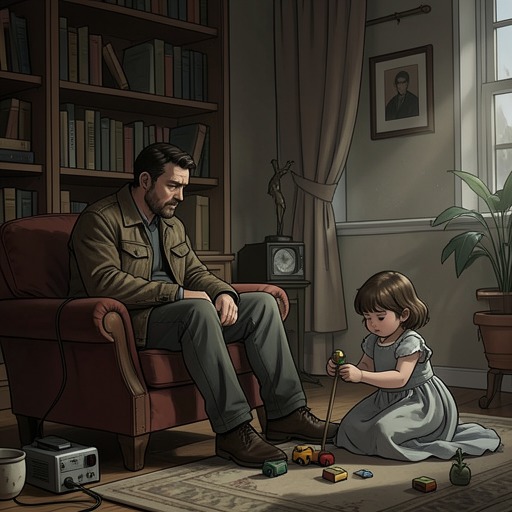
Julia also wanted a little brother and, Michael thought, probably would have been happy with more siblings. For a long time, she did not understand what divorce meant. When she visited Michael, she wanted him to stay; when she visited Gertrud, she wanted her mother to come too. At departures, she watched Michael from the window as he got into the car, a scene he recalls as heartbreaking.
Michael’s Guilt and the Relationship’s Significance
Michael interprets Julia’s distress not merely as disappointment but as the loss of something she was entitled to have: warmth, safety, and an intact family. He feels that he and Gertrud cheated her of that right by divorcing, and that their shared decision did not divide or diminish his guilt.
The relationship therefore reveals a consequence of Michael’s private unhappiness beyond the marriage itself. Julia’s wishes and distress become the measure by which he looks back on the separation: even a divorce without bitterness, and a continuing loyalty between the parents, could not give her the family arrangement she wanted. His account preserves both the parents’ inability to continue together and his recognition of what that choice cost their daughter.